
Poor posture is more than a visual habit. Repeated slouching, leaning, or holding the head forward can increase strain on the muscles, joints, ligaments, and spinal discs. Over time, these patterns may contribute to pain, reduced mobility, headaches, balance changes, and difficulty performing everyday activities.
Posture does not need to look rigid or “perfect” to be healthy. The goal is to use positions that allow the spine, hips, shoulders, and joints to share physical demands without prolonged stress.
What counts as poor posture?
Poor posture generally means holding the body in a position that places excessive or uneven load on the musculoskeletal system. It may occur while sitting, standing, walking, sleeping, working, or using a phone.
Common examples include:
- Sitting with the head far in front of the shoulders
- Rounding the upper back for long periods
- Leaning to one side while standing
- Crossing the legs continuously or sitting on one foot
- Working with the screen, counter, or steering wheel at an uncomfortable height
- Bending the neck downward to read a phone
- Standing with most of the body weight on one leg
Posture is both static and dynamic. Static posture involves sitting or standing still, while dynamic posture involves movement such as lifting, reaching, walking, or bending. A person may sit comfortably but still use poor body mechanics while shoveling, carrying groceries, or clearing seasonal snow.
The natural curves of the spine should be maintained without being exaggerated. The head generally rests over the shoulders, and the shoulders remain reasonably aligned over the hips. ([medlineplus.gov](https://www.medlineplus.gov/guidetogoodposture.html?utm_source=openai))
How can posture cause neck, shoulder, and back pain?
Poor posture can create muscular overwork. When the head moves forward, the muscles at the back of the neck and upper shoulders must work harder to support it. Holding this position for hours may lead to tightness, soreness, or a tension-type headache.
A rounded upper back can also affect the shoulder blades. Muscles may become overactive in some areas and underused in others, changing how the shoulders move during reaching or lifting. This can make routine tasks—such as placing items on a shelf, carrying a child, or working at a kitchen counter—more uncomfortable.
In the lower back, slouched sitting may reduce the normal spinal curve and increase stress on surrounding tissues. Prolonged sitting has been associated with lower back discomfort, particularly when combined with limited movement, poor workstation arrangement, or repetitive tasks. ([stacks.cdc.gov](https://stacks.cdc.gov/view/cdc/222379/cdc_222379_DS1.pdf?utm_source=openai))
Posture is rarely the only cause of pain. Previous injuries, arthritis, muscle weakness, sleep habits, stress, work demands, and general activity levels may also play a role.
Can poor posture affect breathing and digestion?
Severe or prolonged slumping may restrict the movement of the rib cage and diaphragm. This can make deep breathing feel less comfortable, especially when sitting curled forward for a long period. It does not mean that every breathing problem is posture-related; shortness of breath, chest pain, or sudden breathing difficulty requires prompt medical attention.
A compressed seated position may also make digestion feel less comfortable for some people. Bending forward after a meal can increase abdominal pressure and may worsen symptoms such as bloating or reflux in susceptible individuals. Posture alone does not explain persistent digestive symptoms, but body position can influence how comfortable a person feels.
MedlinePlus identifies possible posture-related effects including reduced flexibility, altered joint movement, balance changes, and difficulty breathing or digesting food. ([medlineplus.gov](https://www.medlineplus.gov/guidetogoodposture.html?utm_source=openai))
Does poor posture affect balance and movement?
It can. Head, trunk, and hip alignment help the nervous system interpret where the body is in space. A forward head, uneven stance, or stiff upper back may change how a person distributes weight while standing or walking.
These changes may be especially noticeable when:
- Walking on icy or uneven surfaces during winter
- Going up and down stairs
- Carrying bags in one hand
- Turning quickly while holding an object
- Rising from a low chair
- Working in a basement, garage, or outdoor area with limited room to move
Poor posture does not automatically cause falls. However, reduced mobility, stiffness, weakness, vision problems, medication effects, and balance disorders can combine to increase risk. Older adults or anyone with repeated falls should receive an appropriate medical evaluation rather than assuming posture is the only explanation.
Why do phones, laptops, and home work areas matter?
A workstation that does not fit the person can encourage awkward positions. The issue is often not one specific device but the amount of time spent using it without changing position.
For a seated setup:
- Keep the screen near eye level so the neck does not remain bent downward.
- Support the lower back and keep both feet supported.
- Let the shoulders relax rather than pulling them forcefully backward.
- Keep elbows close to the body, generally bent at a comfortable angle.
- Change positions regularly instead of trying to hold one “correct” pose all day.
- Take brief walking or standing breaks during long periods of computer use.

The same principle applies at home. Countertops, dining chairs, couches, and beds may encourage slumping if they are too high, too low, or poorly supportive. In North Hempstead, seasonal indoor routines can also affect posture: more time indoors, remote work, home projects, and prolonged television or device use may reduce natural movement during colder months.
The CDC’s National Institute for Occupational Safety and Health describes awkward posture, repetition, force, and sustained positions as factors that can contribute to work-related musculoskeletal disorders. Ergonomics focuses on adapting tasks and environments to human capabilities rather than expecting the body to tolerate poor arrangements indefinitely. ([cdc.gov](https://www.cdc.gov/niosh/ergonomics/about/index.html?utm_source=openai))
How can posture be improved without becoming rigid?
Posture usually improves through frequent adjustments, strength, mobility, and awareness—not by holding the shoulders stiffly or constantly tightening the abdomen.
Useful habits include:
- Alternate between sitting, standing, and walking when possible.
- Move the neck, shoulders, hips, and ankles gently throughout the day.
- Strengthen the muscles of the back, abdomen, hips, and legs through appropriate exercise.
- Keep frequently used objects within easy reach.
- Use both hands when carrying uneven or heavy loads.
- Bend at the hips and knees when lifting rather than rounding the back under load.
- Notice which activities repeatedly trigger discomfort.
- Adjust the task, height, support, or position instead of simply tolerating the strain.
A short movement break every 30 to 60 minutes may be more realistic and useful than attempting to maintain a fixed posture for several hours. Comfort, freedom of movement, and the ability to change positions are practical signs that an arrangement is working.
When might pain require medical attention?
Posture-related discomfort is often mild and improves with movement, rest, and changes to the activity. Persistent, worsening, or unexplained symptoms deserve medical assessment, especially when they interfere with sleep, walking, work, or daily tasks.
Prompt medical care is appropriate for back or neck symptoms accompanied by:
- New weakness in an arm or leg
- Numbness that is spreading or severe
- Loss of bladder or bowel control
- Numbness in the groin or saddle area
- Fever, unexplained weight loss, or significant illness
- A serious fall, collision, or other injury
- Chest pain, severe headache, or breathing difficulty
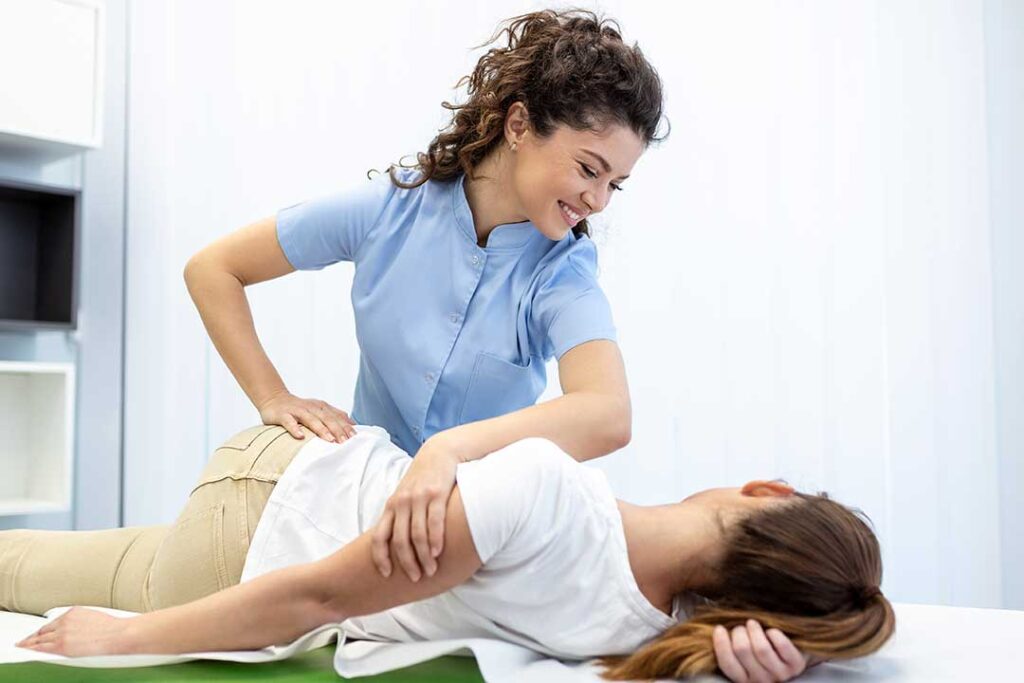
A chiropractor may assess movement, joint function, muscle balance, and everyday mechanical factors, but posture should be considered alongside the full health history. A single photograph or visible rounded shoulder does not diagnose the source of pain. Good guidance should account for symptoms, activity demands, previous injuries, and warning signs.
Understanding posture as a movement habit—not a test of personal discipline—makes it easier to identify practical changes. The most useful goal is not to hold the body in one ideal position, but to create more opportunities for comfortable movement throughout the day.
